
Category PIG Meeting Cases
PIG Meeting: 25th February 2021
Pregnant patient with pulmonary embolism
PIG Meeting: 25th February 2021
34yo patient for elective CS, complex chronic and acute health problems.
Background
- Ehlers Danlos Syndrome
- Hypermobility type
- ‘Marfans features’ (but not Marfans) with lens dislocation, high arched palate, spontaneous L PTx and known small bullae on R.
- Bowel and gastric stasis requiring caecostomy.
- Central and obstructive OSA – adherent to CPAP
- BMI 38
- Uveitis HLAB27 +
- Raynaud’s phenomenon
- Pregnancy – G1P0, nil foetal complications.
Issues
- PE – clinical symptoms + V/Q mismatch. On therapeutic clexane since ~10/7
- ? Risk of aortic root aneurysm
- Somewhat unusual picture. Risk difficult to quantify
- Minimal harm from TTE (n.b. normal aortic root on subsequent TTE).
- Risk of local anaesthetic failure
- Patient has previously had some failed peripheral nerve blocks but successful rescue blocks
Discussion
- What is Ehlers Danlos Syndrome?
- The most common group of disorders in the family of genetically determined heritable connective tissue disorders.
- Ligament laxity, joint hypermobility, fragility of connective tissues, poor wound healing.
- Multiple subtypes with cardiac, GIT, autonomic and chronic pain issues.
- Anaesthetic technique
- Morphine adverse drug reaction (rash).
- Neuraxial ideal. Consider CSE as colorectal team on standby given previous bowel surgery.
- TAP catheters useful to avoid opioid exacerbation of gut stasis postop + risks of resp depression with opioids. Some reports of ineffective or partially effective LAs however not contraindicated and may provide substantial benefit.
- If GA required, lung protective ventilation to minimise risk of bullae rupture.
- Note that Ehlers Danlos patients also have increased risk of bleeding post-operatively
- Postoperative location (? Delivery suite, ? K2)
- High VTE risk postop however this risk continues for weeks so no specific observation needed.
- OSA well optimised
- Normal care on K2 reasonable
- Anticoagulation management
- Discussed ? Need for conversion to heparin given known PE, to minimise time off anticoagulation
- Overall thought that 24h off clexane reasonable and the logistics in starting/stopping heparin make it of limited value for this short period of time.
Frail patient with fungating tumour, severe cardiac disease
PIG Meeting: 25th February 2021
79yo nursing home resident with an invasive, fungating BCC or SCC on his leg.
Background
- Cardiac disease
- PPM for AF/CHB
- Admitted with CCF last year – found to have PHTN with TR and RV failure.
- Improved, discharged to NH
- T2DM diet controlled
- RA
- CKD
- Low exercise tolerance 3.6METS on DASI
Issues
- Profound SOB
- Rpt TTE – relatively unchanged, mild improvement
- Anaemia
- Hb 117 -> 83, ? Cause. Nil obvious bleeding.
- Likely contributing to his SOB
Discussion
- Should he have surgery?
- Overall life expectancy appears short
- Surgeon, family and patient all keen to proceed
- Essentially palliative surgery for pain/symptom relief
- Opportunities for optimisation?
- Cardiologist r/v suggests HF reasonably controlled
- PRBC transfusion (likely as part of surgical admission due to logistic challenges with patients in NH)
- Anaesthetic technique?
- Skin grafting required so SAB likely ideal. Care with haemodynamic given pulmonary hypertension.
Pregnant patient with mitochondrial degenerative disorder
PIG Meeting: 25th February 2021
34yo lady booked for elective CS.
Background
- Mitochondrial degenerative disorder POLG (DNA Polymerase gamma gene – responsible for the integrity of mitochondrial DNA)
- OSA – Central and peripheral
- Bulbar dysfunction
- Ophthalmoplegia
- Ataxia, pre-pregnancy 2km with FASF, now mostly in wheelchair. Falls
- Epileptiform EEG
- Obesity BMI 38
- Pregnancy:
- G1PO
- Pregnancy itself uneventful.
- Nil genetic testing of partner or foetus
- On prophylactic clexane due to immobility
- Distance patient (Tamworth)
Issues
- Exercise tolerance reduction
- TTE in December normal, but known risk of cardiac decompensation
- Fatigue and SOB increasing. Progressive orthopnoea + possible PND. ? Pregnancy v. Pathologic process
- Risk of cardiac dysrhythmias. Nil reported palpitations
- Hasn’t seen cardiologist as part of antenatal care
- Spirometry in clinic showed normal volumes
- ? Seizures
- Recent episodes of 50-60 desaturation events overnight. ? CPAP malfunction v. CCF v. seizures
- Known epileptiform EEG.
- Risks of rapid progression from partial seizures to refractory, fatal seizures with POLG
- Lamotrigine being empirically up-titrated by neurologist
- Ambulatory EEG cancelled by patient due to logistic challenges and lack of understanding about significance
- Sodium valproate and MgSO4 contraindicated.
- CPAP use
- Machine alarming ? Cause
- Patient now non-adherent
Discussion
- Pre-op investigations
- Baseline lactate (in anaesthetic bay) helps team to understand intra/postoperative levels
- Baseline CK, CMP
- Preop multidisciplinary reviews
- Needs input from cardiology – speak with the cardiologist (Hatton) who works with high risk obstetric patients.
- Needs CPAP review and optimisation
- Needs ambulatory EEG
- Post op care location
- Given risks of refractory seizures, and need for repeated lactate monitoring and strict fluid balance, ICU level 2 necessary
- Patient accepting of this.
- Father of baby will be admitted to care for baby.
- Anaesthetic technique
- Neuraxial
- Nil specific contraindications.
- Spinous processes palpable and patient’s body habitus relatively conducive to positioning.
- May require some head-up positioning. Negotiate with surgeons.
- IT morphine(+/-) and TAP catheters to minimise postop systemic opioids to avoid gut stasis (known issue with POLG) and hypoventilation
- Patient prefers SAB but happy to go with safest option
- EDB (without spinal) for slow onset (avoid sudden resp accessory muscle paralysis) ideal.
- Intrathecal catheter also an option
- GA?
- No MH risk
- Non-depolarising MRs safe
- Attention to vent/CO2 mx given seizure propensity
- Difficult to detect seizures
- Dedicated obstetric anaesthetist
- IVF with dextrose while fasting
- Neuraxial
Total hip replacement with severe bilateral hip osteoarthritis
PIG Meeting: 18th February 2021
- Elderly man seen in perioperative clinic for THR.
- Requiring arthroplasty to both hips.
Background
- Longstanding severe OA. Now wheelchair bound and sleeping in a chair
- Significant bilateral peripheral oedema both legs, likely due to inability to mobilise/raise legs
- Difficult social circumstances
- Orthopaedic team consulted in perioperative clinic and discussed possibility of bilateral THR
Issues
- Surgeon decided not suitable for bilateral hip arthroplasty. Likely due to frailty.
- Discussion around optimal timing for the second joint replacement taking into VTE risk
- No evidence but consensus was sensible to leave 6 weeks between surgeries
- Update on case provided by procedural anaesthetist.
- Unable to attempt neuraxial block due to difficulty in positioning
- Significant post-operative delirium
- Would have likely been a poor candidate for bilateral joint replacements
- Predicted difficultly with rehab and post-operative mobilization due to severity of OA in other hip
PIG Meeting: 18th February 2021
PIG Meeting Notes
Cases
- Mitraclip
- Ameloblastoma
- Ivor-Lewis Oesophagectomy with Ischaemic Heart Disease
- Bronchoalveolar lavage for pulmonary alveolar proteinosis using VV ECMO
- Laparoscopic cholecystectomy with severe COPD
- Knee replacement with abnormal SESTAMIBI
- Total hip replacement with severe bilateral hip osteoarthritis
Knee replacement with abnormal SESTAMIBI
PIG Meeting: 18th February 2021
73 year old man for unicompartmental knee replacement
Background
- IHD with significant history of ACS requiring PCI between 2000 and 2008.
- No symptoms reported in last 12 years.
- NIDDM. HBA1c = 7.2
- DASI 7 METS. Can mow lawn slowly.
- BMI = 39
Issues
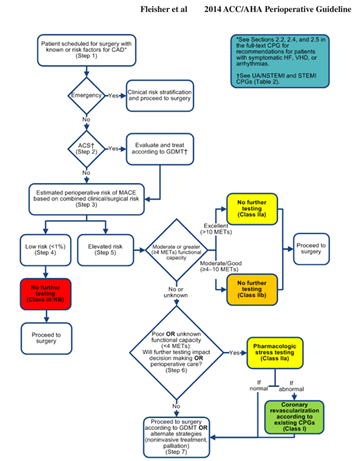
- MIBI ordered in clinic – moderately impaired coronary perfusion reserve in a single coronary artery territory (RCA). Reduction in LVEF post-stress. Findings stratify the patient to be intermediate-high risk for perioperative coronary events during high risk surgical procedures
- Dr Nick Collins reviewed and recommends deferment of procedure and coronary angiogram
Discussion
- Suitability of testing given asymptomatic with reasonable functional capacity
- AHA guidelines would suggest no requirement for non-invasive stress testing with DASI of 7 METS
- Consensus that if patient had attended regular cardiology follow-up, he would have likely had a stress test in the preceding 12 years given diabetic patient with known coronary artery disease.
Plan
- Defer surgery pending coronary angiogram +/- PCI
Laparoscopic cholecystectomy with severe COPD
PIG Meeting: 18th February 2021
67 year old lady for elective laparoscopic Cholecystectomy
Background
- Recent admission for obstructive cholangitis
Issues
- Moderate-severe COPD.
- Current smoker
- Recent deterioration in exercise tolerate to 20-30m. NYHA class 3 dyspnoea.
- Spirometry significantly deteriorated from previous. FEV1 = 0.63 (30% pred), FVC 0.94.
- No active infection
- On Clozapine under psychiatry care for schizophrenia
Discussion
- Are there any alternatives to surgery? ERCP and sphincterotomy or stent?
- Requires further discussion with surgical team, laparoscopic cholecystectomy is usual pathway for these patients
- Requires respiratory assessment and optimization. Potential benefits of perioperative steroid therapy
- Cardiac assessment given on clozapine? Has echocardiogram booked to review any possible cardiac complication of clozapine therapy
- Suggestion of potential benefits of preoperative hospital admission for respiratory optimization
- Smoking cessation discussed
Plan
- Defer for 4 weeks while awaiting respiratory review and echocardiogram
- Further discussion with surgical team regarding respiratory co-morbidities and surgical options
- Liaise with psychiatry team given current clozapine therapy
Bronchoalveolar lavage for pulmonary alveolar proteinosis using VV ECMO
PIG Meeting: 18th February 2021
Update on patient presented at CME – severe type 2 respiratory failure during GA with DLT for broncho-alveolar lavage (BAL).
24 year old male with pulmonary alveolar proteinosis
Background
- Previous medulloblastoma treated with radiotherapy and chemotherapy
- Complicated by deafness and renal failure
- Renal transplant
- Restrictive lung physiology
Procedure completed with femoral access and jugular return veno-venous ECMO. Required 5L BAL for each lung with washing out of alveolar protein. 24 hours V-V ECMO support and successfully extubated.
 Perioperative Talk