
Laparoscopic cholecystectomy with severe COPD

PIG Meeting: 18th February 2021

67 year old lady for elective laparoscopic Cholecystectomy

Background

  • Recent admission for obstructive cholangitis

Issues

  • Moderate-severe COPD.
  • Current smoker
  • Recent deterioration in exercise tolerate to 20-30m. NYHA class 3 dyspnoea.
  • Spirometry significantly deteriorated from previous. FEV1 = 0.63 (30% pred), FVC 0.94.
  • No active infection
  • On Clozapine under psychiatry care for schizophrenia

Discussion

  • Are there any alternatives to surgery? ERCP and sphincterotomy or stent?
  • Requires further discussion with surgical team, laparoscopic cholecystectomy is usual pathway for these patients 
  • Requires respiratory assessment and optimization. Potential benefits of perioperative steroid therapy
  • Cardiac assessment given on clozapine? Has echocardiogram booked to review any possible cardiac complication of clozapine therapy
  • Suggestion of potential benefits of preoperative hospital admission for respiratory optimization
  • Smoking cessation discussed

Plan

  • Defer for 4 weeks while awaiting respiratory review and echocardiogram
  • Further discussion with surgical team regarding respiratory co-morbidities and surgical options
  • Liaise with psychiatry team given current clozapine therapy
Bronchoalveolar lavage for pulmonary alveolar proteinosis using VV ECMO

PIG Meeting: 18th February 2021

Update on patient presented at CME – severe type 2 respiratory failure during GA with DLT for broncho-alveolar lavage (BAL).

24 year old male with pulmonary alveolar proteinosis

Background

  • Previous medulloblastoma treated with radiotherapy and chemotherapy
  • Complicated by deafness and renal failure
  • Renal transplant
  • Restrictive lung physiology

Procedure completed with femoral access and jugular return veno-venous ECMO.  Required 5L BAL for each lung with washing out of alveolar protein. 24 hours V-V ECMO support and successfully extubated.

Ivor-Lewis Oesophagectomy with Ischaemic Heart Disease

PIG Meeting: 18th February 2021

69 year old man with Oesophageal cancer

Background

  • Routine preoperative CPET testing revealed ischaemic ECG changes, suspicious of LM disease

Issues

  • Asymptomatic. Noted to have an excellent exercise tolerance on DASI.
  • Exercised to 90% of predicted HR with AT of 15.6ml/kg/min and VE/VCO2 24.6. This represents excellent exercise capacity and would usually indicate patient is fit to proceed to major surgery.
  • Discussed with Dr Collins at the Perioperative Cardiology meeting. Concern re left main coronary artery disease – recommended angiogram
  • Coronary angiogram which revealed mid-eccentric LAD stenosis of 60-70% with normal LVEF
  • No coronary intervention required. Plan to proceed with surgery

Discussion

  • Value of CPET in this instance. Was it a useful test?
  • Discussion centered around the finding of a pathology that didn’t require any intervention.
  • Patient didn’t perform Prehab due to possibility of coronary disease. Was he disadvantaged?
  • Should we be performing CPET in all patients for major surgery or just in those who are clinically borderline candidates?
  • Consensus that there is sufficient evidence for CPET testing perioperatively for major surgery. This patient performed well despite recent completion of NAC and that provides treating team with good prognostic information perioperatively.
  • No delays to surgery and prehabilitation unlikely to improve fitness further as already excellent.

Plan

Ameloblastoma

PIG Meeting: 18th February 2021

86 year old man, consult for Partial Maxillectomy and free flap

Background

  • Chronic lesion in left maxillary sinus with one episode of bleeding last year.
  • CT showed aggressive infiltration in posterior maxilla and pterygoid plates.

Issues

  • Multiple co-morbidities but no active concerns at present and has good QoL at home with wife and supportive family

Discussion

  • Perioperative Risk scoring – SORT score and NSQIP both showed significant risk of mortality, but numbers were discordant 11 vs 3.3%. Why was this?
  • Discussion around the nuances of each risk calculator; SORT score comparatively calculates less risk for cancer patients whereas NSQIP can appear to overestimate perioperative risk, not the case in this instance.
  • The consensus was that the morbidity outcomes were very significant for this patient regardless of mortality outcomes.
  • Patient and family very concerned with preserving QoL and understanding of the limitations of his age and co-morbidities.

Plan

  • Discussion with surgical team regarding other, less invasive surgical options or radiotherapy.
  • Surgical MDT is next week. Further discussion required before proceeding to surgery.

Mitraclip

PIG Meeting: 18th February 2021

First Mitraclip procedure at JHH performed successfully this week!

Background

  • 86 year old man
  • Severe MR, 4 recent admissions to hospital with worsening CCF despite optimal medical therapy .
  • Arial fibrillation, on Apixaban
  • Not a suitable candidate for cardiac surgery given significant frailty and co-morbidities.

Issues

  • New procedure, some uncertainty around what to expect in the perioperative period regarding vasopressor and/or inotrope requirements. Possibly some requirement for inotrope as cardiac status changing from mitral regurgitation to relative mitral stenosis.
  • Anticoagulation ceased for 24 hours preoperatively in consultation with cardiologist
  • Venous access using femoral vein and an atrial septal puncture, theoretically lower bleeding risk than other angiographic procedures via femoral artery
  • Backup plan discussed if open cardiac intervention required – this may include valve dysfunction or embolization of device

Discussion

  • Further mitral clip procedures planned in future. Note that there have been patients that have presented to perioperative clinic for other surgeries who are awaiting Mitraclip procedure. Patients should be on optimal medical therapy for heart failure prior to being considered for Mitraclip procedure.
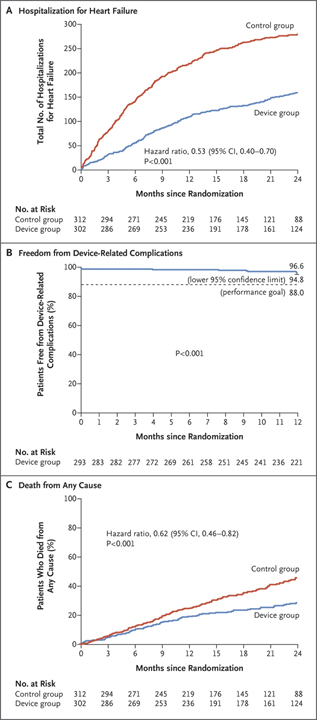
  • Literature shows similar improvement in symptoms and decrease in hospital admissions with mitral clips vs open cardiac surgery. Survival benefit and improved clinical outcomes with mitral clips vs goal-directed medical management (See attached papers CO-APT trial and EVEREST trial).

Plan

  • No specific perioperative interventions required than standard cardiac assessment of valvulopathy patient
  • Case presented to raise awareness of potential patients presenting to pre-operative clinic

PIG Meeting: 11th February 2021

PIG Meeting Notes

PIG Notes 11th February 2021

Cases

Severe metabolic shock after open abdominal aortic aneurysm repair

PIG Meeting: 11th February 2021

Case details

  • Sestamibi preop (organized by vascular surgeons) – normal EF and nil ischaemia
  • Uneventful procedure, short clamp time
  • EDB functioning well, extubated, transported to ICU, doing well
  • ~3am developed shock + respiratory failure
  • Reintubated, NAd and vasopressin commenced
  • Cause of shock difficult to establish
    • CT showed no bleeding, all vessels perfused, some small areas of gut ischaemia but not thought significant enough to cause the degree of shock
    • Bedside TTE – difficult views but nil obvious cause of severe shock
    • Fluid responsive with lactate dropping from 9 to 5 with fluid resus
  • Surgical team reluctant to take patient to OT for a re-do laparotomy which they believed was likely to be non-diagnostic.
  • Patient eventually taken to OT – ischaemic colon and 2m of small bowel – resected, abdo left open
  • Patient survived with AKI

Discussion

  • Discussion involved consideration of immediate postoperative complications needing surgical complication to be excluded. This case shows the important of looking to the obvious, common causes of shock in a patient after major surgery.
  • Discussion about whether or not a TOE should have been used in this patient while the cause of shock was still unclear. The clinician felt that the limited TTE views obtained were adequate to exclude a cardiac event as a cause of shock, at least while the most likely source (an intra-abdominal complication) was still being investigated.
  • Acknowledged that re-look laparotomies have an accepted false negative rate, in order to avoid missing the opportunity for life-saving intervention.

Cancellation for hypertension

PIG Meeting: 11th February 2021

Case details

  • 1st case: ~66yo woman, distance patient, nil pre-op review, previously diagnosed with HTN, now not medicated (reason unclear). For Bx of vaginal lesion. BP 220/110 + headache, malaise.
  • 2nd case: 92yo lady, for hysteroscopy and D+C for postmenopausal bleeding. Phone consultation from clinic. Similar BP.
  • Surgeons amenable to postponement in both cases.

Discussion

  • Would others have cancelled these patients?
    • Some variability in anaesthetist practices.
    • AAGBI guidelines suggest that if patient’s primary care BP is not known, up to 180mmHg SBP and 110mmHg DBP are acceptable on DOS (See flowchart below and attached paper).
    • The symptoms associated with the severe HTN in the 1st case were felt to be particularly concerning. Patient was reviewed by med reg and started on regular antihypertensives, prior to d/c home.
  • Was this avoidable?
    • Even with in-person consultation this is a difficult issues, with DOS and clinic BPs often falsely elevated due to anxiety and medication changes.

AAGBI recommend not checking preop BP in clinic if documented at acceptable levels from GP (<160/100).

Cancellation for acute shortness of breath

PIG Meeting: 11th February 2021

Case details

  • Phone consult in preop clinic
    • History of well controlled, stable asthma
    • Noted to have sore throat – patient encouraged to obtain COVID test (negative)
    • Pt developed URTI, associated with asthma exacerbation. Surgery postponed.
    • Patient health check prior to new surgery date – symptoms resolved, ok to proceed.
    • DOS – patient acknowledges SOBOE (NYHA Class III). A marked decline from resp function pre-URTI. Wheeze in chest? Surgery cancelled by procedural anaesthetist.

Discussion

  • Was this avoidable?
    • This patient was reviewed by phone in clinic, so while her chest was not examined, it seems that it was the URTI which developed after this consultation which led to her asthma deterioration.
    • Correct procedures were followed with a pre-op health check, however it was only with detailed questioning from the procedural anaesthetist that the patient revealed the key info.
  • Would other anaesthetists have cancelled the patient? – Agreed that for elective surgery, with an ongoing respiratory exacerbation postponement is appropriate. Important to exclude other causes of new SOB (e.g. CCF) if expected resolution doesn’t occur.
  • Have there been an increase in DOS cancellations with our move to phone consultations during COVID? – No
  • Are we proceeding with surgery in patients whom we recognize are un-optimised to avoid DOS cancellations? – Not as per the meeting attendees.